Ever notice how your phone just… works? You step out of your house, get in the car, walk into a building, and somehow your signal bars stay up the entire time without you lifting a finger. That’s not luck. It’s a constant, split-second process happening behind the scenes every single moment your phone is powered on.
Understanding how this works isn’t just a fun bit of tech trivia; it actually explains a lot about why some phone plans feel faster than others, why signal strength changes as you move around, and why choosing the right prepaid SIM card plan matters more than most people realize. So let’s pull back the curtain on what’s really going on when your phone searches for the fastest available network.
Most of us treat our phones like magic boxes. We expect the bars to be full, the video to load instantly, and the call to connect without a hiccup, and when it doesn’t happen, we blame “bad signal” without really knowing what that means. But there’s an entire invisible system of towers, frequencies, and split-second decisions running underneath every text you send and every page you load. Once you understand how it actually works, a lot of everyday phone quirks dropped calls on the highway, slow data in certain buildings, or better speeds after switching carriers start making a lot more sense.
Your Phone Is Always Listening
Here’s something most people don’t think about: your phone isn’t just connected to “a network.” It’s constantly scanning for available network signals around it, comparing them, and deciding which one offers the best combination of speed, strength, and stability.
Think of it like a driver checking traffic apps before choosing a route. Your phone is running the same kind of comparison, except it happens automatically dozens of times a minute, using radio signals instead of GPS data. It’s checking:
- Which towers are in range
- How strong each signal is
- Whether 5G, 4G LTE, or an older network type is available
- How congested each network currently is
- Which option your SIM card and carrier profile are authorized to use
That last point matters more than people expect, and it’s where your SIM card actually enters the picture.
The SIM Card’s Real Job
A SIM card often gets treated like it’s just a tiny plastic chip that “makes your phone work.” In reality, it’s doing something much more specific: it’s identifying you to the network and telling your phone which carrier relationships it’s allowed to connect through.
When your phone scans the airwaves and finds five different towers nearby, your SIM card is part of what determines which of those towers your phone is actually permitted to latch onto. This is why switching to a plan with strong 5G and 4G LTE coverage, like the options available through Infimobile plans, can make a noticeable difference. You’re not just picking a price point; you’re picking which slice of the wireless map you get access to.
This also explains why two people standing in the same spot, holding similar phones, can sometimes see different signal strength. Different carriers have different tower agreements, different frequency access, and different network priority arrangements. Your SIM card is the credential that determines which of those doors your phone can open.
It’s a bit like having two people show up to the same building with different types of keycards. They might be standing in the same lobby, but one keycard opens more doors than the other. Your phone’s hardware might be identical to your neighbor’s, but if your SIM card and plan are tied to broader 5G and 4G LTE access, your actual day-to-day experience load times, call clarity, streaming quality can end up noticeably better, even though nothing about your physical location changed.
5G vs. 4G LTE: How Your Phone Actually Chooses
This is where things get interesting. Your phone doesn’t just default to “5G because it’s newer.” It’s actually running a more nuanced decision process than that.
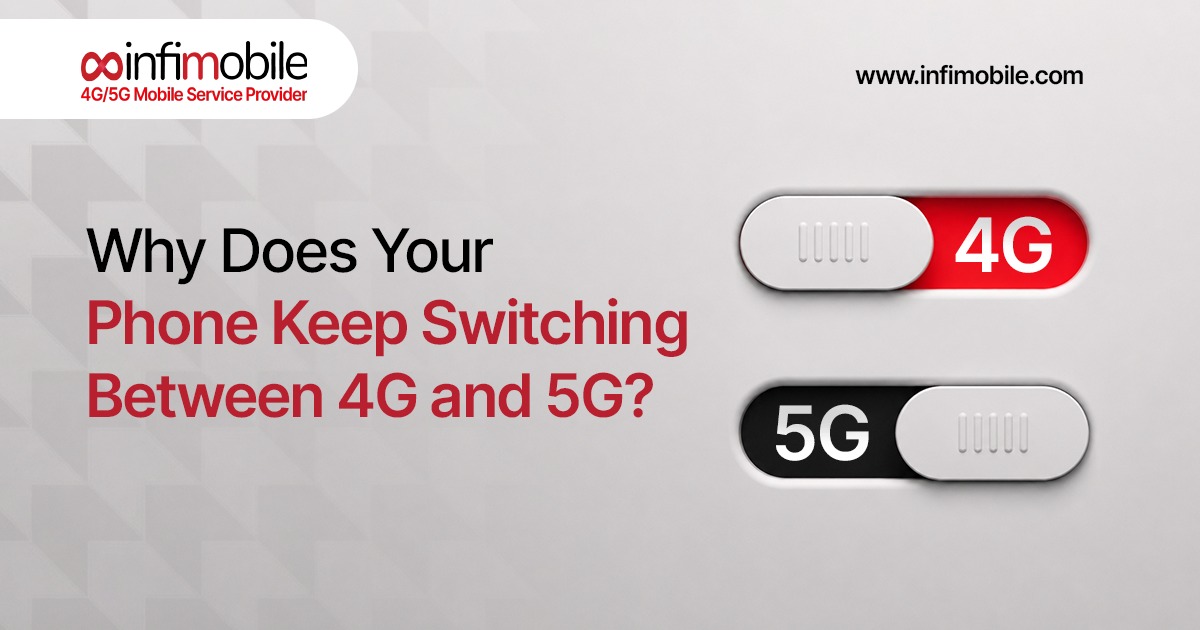
5G networks are incredibly fast, but they don’t always have the same reach as 4G LTE, especially in certain indoor spaces or more rural stretches. So your phone is constantly weighing a simple question: is the 5G signal here strong and stable enough to actually be faster than 4G LTE right now, or would 4G LTE currently give a more reliable connection?
This is why you might notice your phone bouncing between 5G and LTE icons as you move through a building, drive through a city, or walk into a basement-level coffee shop. It’s not a glitch; it’s your phone actively protecting your connection quality in real time.
A few of the factors influencing this decision include:
- Signal strength: How strong the available 5G signal actually is at your exact location
- Network congestion: How many other devices are using that tower right now
- Frequency band: Some 5G bands travel farther but slower, others are faster but shorter-range
- Building materials: Concrete, metal, and certain glass can weaken higher-frequency signals.
- Distance from the tower: Even strong networks weaken the farther you are from the source.
This is also part of why 5G prepaid plans have become such an appealing option. You get access to modern, high-speed infrastructure, and your phone automatically manages the technical juggling so you don’t have to think about any of it.
The Handoff: Switching Towers Without You Noticing
Here’s one of the more impressive parts of the whole system: your phone doesn’t just connect to one tower and stay there. As you move, whether you’re walking, biking, or driving on a highway, your phone is constantly being “handed off” from tower to tower, almost like a relay race where the baton never gets dropped.
This handoff process happens through something called signal triangulation and continuous strength monitoring. As you move farther from one tower, your phone detects the signal weakening and starts checking nearby towers before the connection drops. Once it finds a stronger option, it quietly switches over, ideally so smoothly that you never notice it happened at all.
This is also why phone calls occasionally drop during highway drives through rural areas: if there’s a gap between towers, or the next available tower is far weaker, your phone may not have a strong enough option to hand off to. It’s less about your phone “failing” and more about the physical limits of tower placement in that specific stretch of road.
It’s worth pointing out that this handoff process happens constantly, not just during long drives. Even walking from one room to another, or moving from an office building to the sidewalk outside, can trigger a fresh round of tower comparisons. Your phone doesn’t wait for the signal to fail before looking for something better; it’s proactively checking in the background so the transition, when it happens, is as seamless as possible.
Why the Same Phone Feels Faster on One Plan Than Another
If you’ve ever switched phone plans and immediately noticed a difference in speed, you weren’t imagining it. Since your SIM card determines which network relationships your phone can access, moving to a plan with stronger 5G and 4G LTE coverage can genuinely change your day-to-day experience even on the same device, in the same location.
This is part of why comparing affordable wireless plans isn’t just about price. It’s also about which underlying network infrastructure that price actually gets you access to. A cheap plan riding on weak, congested network access isn’t actually a good deal; it just looks like one on paper.
Infimobile plans are built around solving exactly this gap: giving customers real access to 5G and 4G LTE networks, at a fraction of what many postpaid plans charge, without sacrificing the actual connection quality your phone depends on to do its job well.
This is where the value of budget-friendly phone plans really shows itself. It’s not just about the number on your monthly bill; it’s about getting genuine access to the same underlying network infrastructure that pricier postpaid plans advertise, without paying for the brand name or the contract commitment attached to it. When you strip away the marketing, what actually determines your day-to-day phone experience is the strength and breadth of the network your SIM card can reach, and that’s exactly where a well-built prepaid plan can hold its own against far more expensive alternatives.
How Infimobile Keeps You Connected to the Best Available Network
Every plan through Infimobile is designed with this entire network-finding process in mind. Rather than locking customers into outdated infrastructure or throttled access, Infimobile plans are structured to work with your phone’s natural ability to find and connect to the strongest, fastest signal available in your area.
This includes support for:
- 5G and 4G LTE coverage, so your phone always has modern options to choose from
- WiFi calling and texting, which gives your phone an additional connection path when cellular signal is weak indoors
- Hotspot add-on availability, for sharing your connection with other devices when you need it
- Unlimited nationwide talk and text, so communication stays consistent regardless of which network your phone connects through
All of this comes without the long-term contracts typically associated with traditional carriers just straightforward, no-contract phone plans that let your device do what it’s built to do.
A Few Ways to Help Your Phone Find a Better Signal
Since so much of this process happens automatically, there’s not a ton you need to actively manage. But a few small habits can help:
- Avoid unnecessary metal or concrete barriers when possible; thick walls and elevators are common signal blockers.
- Restart your phone occasionally; this forces it to rescan and reconnect to the strongest nearby option.
- Enable WiFi calling if you’re often in buildings with weak cellular signal.
- Check your coverage map before traveling to unfamiliar areas, especially rural regions.
- Keep your SIM and plan updated; outdated SIM technology can sometimes limit access to newer network bands.
None of this requires technical expertise. It’s really just about understanding that your phone is working constantly in the background, and giving it the best possible conditions to do its job.
The Bottom Line
Your phone’s ability to find the fastest available network is a quiet, constant process involving signal scanning, tower handoffs, and carrier-level access, all working together so you don’t have to think about any of it. But the plan you choose still plays a real role in the quality of that experience.
Choosing a provider with strong 5G and 4G LTE access, transparent pricing, and flexible prepaid plans like Infimobile means your phone has better raw material to work with every time it searches for a connection. It’s a small decision that ends up shaping a big part of your daily mobile experience.
Frequently Asked Questions
Your phone continuously scans nearby towers and compares signal strength, network type (5G, 4G LTE, or older), and congestion levels. It also checks which networks your SIM card and carrier plan are authorized to access, then connects to the strongest available option that meets those criteria.
This switching happens because 5G signals, while fast, don’t always travel as far or penetrate buildings as effectively as 4G LTE. Your phone constantly evaluates which network will give you a more stable, reliable connection at your current location and adjusts automatically.
Yes. Your SIM card identifies you to the network and determines which carrier infrastructure your phone is authorized to connect through. This is part of why switching to a plan with stronger 5G and 4G LTE coverage, like those offered through Infimobile, can noticeably improve your connection quality.
Thick walls, concrete, metal structures, and distance from the nearest tower can all weaken cellular signals, especially higher-frequency 5G bands. In these situations, features like WiFi calling and texting can help maintain a stable connection.
Yes. Since different providers have different network access and tower agreements, switching to a plan with better 5G and 4G LTE coverage can improve real-world speed and reliability, even on the same device in the same location.
Want a plan built around real 5G and 4G LTE access without the contract? Visit www.infimobile.com to explore affordable, flexible prepaid plans designed to keep you connected wherever you go.