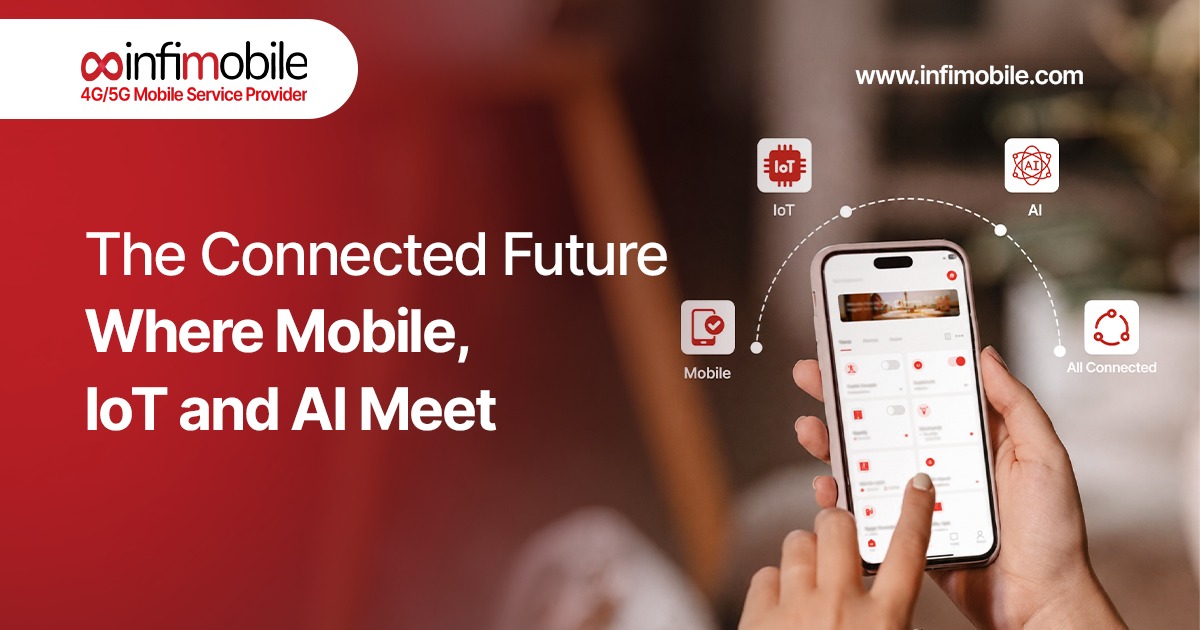
The Internet of Things (IoT) has quietly become one of the most transformative forces in modern technology. From smart thermostats and fitness trackers to connected cars and industrial sensors, billions of devices now communicate with each other and with us in real time. But behind every connected device is a network that makes that communication possible, and increasingly, that network is powered by Mobile Virtual Network Operators, or MVNOs.
While much of the spotlight in wireless technology goes to the major infrastructure carriers, MVNOs are playing a surprisingly critical role in scaling IoT connectivity across homes, businesses, and entire industries. In this article, we’ll explore what MVNOs are, why they’re so well-suited for IoT applications, and how they’re shaping the future of connected technology.
What Is an MVNO?
An MVNO, or Mobile Virtual Network Operator, is a wireless service provider that doesn’t own its own cellular network infrastructure. Instead, MVNOs lease network capacity from major carriers and use that access to offer their own-branded mobile plans, often with more flexible pricing, simpler terms, and a stronger focus on the customer experience.
This “virtual” model means MVNOs can operate leaner than traditional carriers, without the enormous capital costs of building and maintaining cell towers. That efficiency translates into more competitive pricing and more innovative service models, which is exactly what makes MVNOs so appealing for IoT deployment.
Why IoT Needs a Different Kind of Network Provider
Traditional mobile plans are designed around a single, predictable use case: a person using a smartphone to call, text, and browse the internet. IoT devices break that mold entirely. A single business might need to connect thousands of devices: parking sensors, delivery trucks, medical monitors, agricultural equipment, each with wildly different data needs, usage patterns, and geographic footprints.
This is where the MVNO model becomes especially valuable. Because MVNOs aren’t tied to the rigid infrastructure and legacy billing systems of network-owning carriers, they can design connectivity plans specifically around machine-to-machine (M2M) communication rather than human usage habits. That flexibility allows businesses to scale IoT deployments without being boxed into traditional consumer plan structures.
How MVNO IoT Connectivity Actually Works
To understand why MVNOs are so effective at powering IoT, it helps to look at what happens behind the scenes. When an MVNO deploys connectivity for IoT devices, several layers of technology work together to keep everything running smoothly.
Network Aggregation: Many MVNOs partner with multiple underlying network providers rather than just one. This allows a single IoT SIM to connect to whichever network offers the strongest signal in a given location, reducing dead zones and improving overall reliability across large device deployments.
Data Pooling: Instead of assigning a fixed data allowance to each individual device, MVNOs often let businesses pool data across an entire fleet of connected devices. This means a smart building with hundreds of low-usage sensors and a handful of high-usage cameras can share one flexible data bucket instead of paying for rigid, per-device plans that don’t reflect real usage patterns.
Remote SIM Provisioning: Whether through physical SIMs or eSIM technology, MVNOs typically offer remote activation and configuration tools. This allows businesses to activate, pause, or reassign connectivity for individual devices without needing physical access to the hardware, which is especially useful for devices deployed in hard-to-reach or remote locations.
API-Driven Management: Most MVNO IoT platforms provide application programming interfaces (APIs) that let businesses integrate connectivity management directly into their own software systems. This means a logistics company, for example, can monitor device connectivity status alongside shipment tracking data in a single unified dashboard.
Key Ways MVNOs Power IoT Connectivity
1. Smart Home Devices
Smart speakers, video doorbells, connected thermostats, and home security systems all rely on consistent, low-latency connectivity. MVNOs provide the backbone data plans that allow these devices to stay connected even without relying solely on home Wi-Fi, offering backup cellular connectivity that keeps smart homes online during outages.
2. Wearable Technology
Fitness trackers, smartwatches, and health-monitoring wearables increasingly include built-in cellular connectivity so they can function independently of a paired smartphone. MVNOs make it possible for wearable manufacturers to offer affordable, embedded data plans without needing to build their own network infrastructure.
3. Connected Vehicles
Modern vehicles are essentially rolling data centers, transmitting information about location, diagnostics, driver behavior, and infotainment usage. MVNO-powered SIM cards embedded in vehicles allow automakers to offer real-time navigation, remote diagnostics, and emergency response features, all running on flexible data plans tailored to vehicle telematics.
4. Healthcare and Remote Patient Monitoring
The healthcare industry has rapidly adopted connected devices for remote patient monitoring, from glucose monitors to wearable heart rate sensors. These devices often need to transmit small amounts of critical data continuously and reliably. MVNOs offer healthcare providers customizable, HIPAA-conscious connectivity solutions that don’t require the overhead of negotiating directly with infrastructure carriers.
5. Smart Agriculture
Modern farming increasingly depends on connected sensors that monitor soil moisture, weather conditions, livestock health, and equipment performance. Because agricultural operations often span large, rural areas with inconsistent coverage, MVNOs can offer multi-network SIM solutions that automatically connect to whichever available network provides the strongest signal in a given area.
6. Retail and Supply Chain Logistics
From smart shelving that tracks inventory in real time to GPS-enabled shipping containers, IoT has transformed how goods move through the supply chain. MVNOs provide the scalable, pay-as-you-go connectivity models that let logistics companies track thousands of assets simultaneously without unpredictable network costs.
7. Smart Cities and Public Infrastructure
Municipalities are increasingly deploying connected streetlights, traffic sensors, environmental monitors, and public safety devices. MVNOs offer the flexible, cost-effective connectivity that makes large-scale smart city projects financially feasible, especially for local governments operating on limited budgets.
8. Industrial IoT (IIoT)
In manufacturing and industrial settings, connected machinery, predictive maintenance sensors, and automated equipment rely on constant data transmission to prevent downtime and optimize performance. MVNOs give industrial operators the ability to deploy private, secure IoT networks without the massive upfront investment required to build proprietary infrastructure.
The Core Benefits of MVNO-Powered IoT Connectivity
Cost Efficiency at Scale
Because MVNOs don’t carry the overhead of owning physical network infrastructure, they can often offer more competitive, usage-based pricing models for IoT deployments. This is especially valuable for businesses managing large fleets of connected devices, where even small per-device savings add up significantly across thousands of units.
Flexible, Customizable Plans
Unlike one-size-fits-all consumer mobile plans, MVNOs can build data plans specifically tailored to IoT use cases, whether that means ultra-low data allowances for simple sensors or higher-capacity plans for data-intensive applications like connected vehicles.
Faster Time to Market
Building proprietary network infrastructure takes years and enormous capital investment. By leasing access from established networks, MVNOs allow device manufacturers and businesses to launch IoT products and services far more quickly.
Simplified Device Management
Many MVNOs offer centralized dashboards that let businesses monitor, activate, and manage thousands of connected SIMs from a single interface, streamlining what would otherwise be a logistical nightmare for large-scale IoT fleets.
Multi-Network Reliability
Some MVNO IoT solutions use multi-IMSI or multi-network SIM technology, allowing a single SIM card to automatically switch between available networks depending on signal strength and location. This is especially valuable for IoT applications that operate across large geographic areas, such as logistics and agriculture.
The Role of eSIM Technology in IoT Growth
Embedded SIM (eSIM) technology has become a major catalyst for IoT expansion, and MVNOs have been quick to adopt it. Unlike physical SIM cards, eSIMs are built directly into a device and can be remotely provisioned or reprogrammed without physically swapping hardware.
For IoT manufacturers, this means devices can be shipped globally with connectivity that’s activated and configured after the product reaches its destination, rather than requiring region-specific SIM cards. MVNOs offering eSIM-based IoT plans give businesses far more flexibility to deploy devices across different markets without logistical headaches.
Challenges MVNOs Face in the IoT Space
While MVNOs offer significant advantages for IoT connectivity, the model isn’t without its challenges:
- Network Dependency: Since MVNOs lease access rather than own infrastructure, their service quality is ultimately tied to the performance and coverage of the underlying network provider.
- Security Considerations: With billions of connected devices transmitting sensitive data, MVNOs must implement robust security protocols to protect against vulnerabilities, especially in industries like healthcare and finance.
- Scalability Demands: As IoT deployments grow into the tens of thousands of devices, MVNOs need reliable backend systems capable of managing massive volumes of simultaneous connections without performance degradation.
- Regulatory Compliance: Depending on the industry, IoT deployments may be subject to strict data privacy and security regulations, requiring MVNOs to build compliant infrastructure and reporting systems.
Choosing the Right MVNO for an IoT Deployment
Not all MVNOs are built the same, and businesses evaluating connectivity partners for IoT projects should weigh a few key factors before committing:
- Coverage footprint: Does the MVNO offer multi-network access, or is it tied to a single underlying carrier? Broader coverage reduces the risk of dead zones, especially for mobile or rural deployments like agriculture and logistics.
- Scalability: Can the provider support a deployment that grows from a pilot program of a few dozen devices to a full rollout of thousands, without requiring a complete infrastructure overhaul?
- Management tools: Look for centralized dashboards, real-time usage alerts, and API access that make it easy to monitor and manage large device fleets without manual intervention.
- Security protocols: Given the sensitive nature of data in industries like healthcare and finance, it’s worth confirming what encryption standards and network security measures a provider has in place.
- Pricing flexibility: IoT use cases vary enormously in data needs, so a provider offering pooled data, tiered pricing, or usage-based billing will generally offer better long-term value than rigid, fixed-rate consumer-style plans.
Taking the time to evaluate these factors upfront can save businesses significant headaches down the line, particularly as IoT deployments scale from proof-of-concept to full production.
Real-World Momentum Behind MVNO-Powered IoT
The shift toward MVNO-powered IoT connectivity isn’t theoretical; it’s already reshaping how everyday products function. Fitness wearables with built-in cellular data no longer require a smartphone nearby to send an emergency alert. Fleet management companies can track a delivery van’s exact location, fuel efficiency, and maintenance needs in real time, all through a single embedded SIM. Even household appliances, from washing machines to refrigerators, increasingly include cellular connectivity for remote diagnostics and software updates.
This momentum is largely possible because MVNOs removed the barrier to entry that used to exist when only network-owning carriers could provide cellular connectivity. Smaller manufacturers, startups, and mid-sized businesses that could never negotiate directly with a major infrastructure carrier can now access enterprise-grade connectivity through an MVNO partner, leveling the playing field for IoT innovation across industries of every size.
The Future: 5G, AI, and Edge Computing
The next wave of IoT growth will be shaped heavily by 5G network expansion, and MVNOs are positioning themselves to capitalize on it. 5G’s low latency and high device density support make it ideal for large-scale IoT deployments, from autonomous vehicles to real-time industrial automation.
Artificial intelligence is also playing a growing role in how MVNOs manage IoT networks. AI-driven network optimization can predict traffic patterns, automatically balance loads across available networks, and detect anomalies that might indicate device malfunctions or security threats. Combined with edge computing, which processes data closer to the source rather than relying entirely on centralized servers, this creates faster, more efficient IoT ecosystems capable of handling the next generation of connected devices.
Where Infimobile Fits Into the MVNO Landscape
As a prepaid MVNO, Infimobile reflects many of the same principles that make the MVNO model so effective for IoT: flexibility, transparent pricing, and a customer-first approach that doesn’t require the long-term contracts or credit checks associated with traditional carriers. While Infimobile’s core focus is on affordable, reliable prepaid wireless plans for everyday consumers, the underlying MVNO framework is the same technology and business model powering the broader IoT revolution across industries.
As connectivity needs continue to diversify, from smartphones to smart cities, the agility of the MVNO model will only become more valuable, whether it’s helping a family find an affordable phone plan or helping a logistics company track a fleet of delivery vehicles in real time.
Final Thoughts
MVNOs have moved far beyond their original role as budget-friendly alternatives to major carriers. Today, they’re a driving force behind the Internet of Things, offering the flexibility, scalability, and cost efficiency that traditional network-owning carriers often can’t match. As 5G, eSIM technology, and AI-driven network management continue to evolve, MVNOs are well-positioned to power the next generation of connected devices, transforming everything from our homes to our cities.
Frequently Asked Questions (FAQs)
MVNO stands for Mobile Virtual Network Operator. Unlike traditional carriers that own and operate their own physical network infrastructure, MVNOs lease network access from those carriers and offer their own branded service plans, often with more flexible pricing and terms.
IoT devices have very different connectivity needs than smartphones, often requiring low-data, high-reliability connections across large device fleets. MVNOs can design custom data plans and management tools specifically suited to machine-to-machine communication, something traditional consumer plans aren’t built for.
Industries like healthcare, agriculture, logistics, automotive, and manufacturing benefit significantly from MVNO-powered IoT solutions, thanks to flexible data plans, multi-network reliability, and centralized device management tools designed for large-scale deployments.
eSIM technology allows devices to be remotely provisioned and reconfigured without needing a physical SIM card swap. This makes it easier for manufacturers to deploy IoT devices globally and activate connectivity after the product reaches its final destination.
Since MVNOs lease access from established network infrastructure, their coverage and reliability are closely tied to the performance of those underlying networks. Many MVNOs also use multi-network SIM technology to improve reliability by automatically connecting to the strongest available signal.