Shop for a phone plan, and you’ll run into a pile of overlapping terms: carrier, wireless provider, network operator, MNO, MVNO. Companies and reviewers use them loosely, and sometimes interchangeably, which makes it hard to tell what you’re actually buying. Does the company on your phone bill own the towers your calls travel through? Does it matter?
It does matter, and the distinction is simpler than the jargon suggests. This guide explains what a wireless carrier is, what a network operator is, how the two overlap, and why the difference affects your coverage, your price, and the kind of service you can expect.
Table of Contents
- The Short Answer
- What Is a Network Operator?
- What Is a Wireless Carrier?
- Where MVNOs Fit In
- Side by Side: Network Operator vs. Wireless Carrier
- What the Difference Means for You
- Common Myths, Cleared Up
- How Infimobile Fits In
- How to Choose the Right Provider
- FAQs
The Short Answer
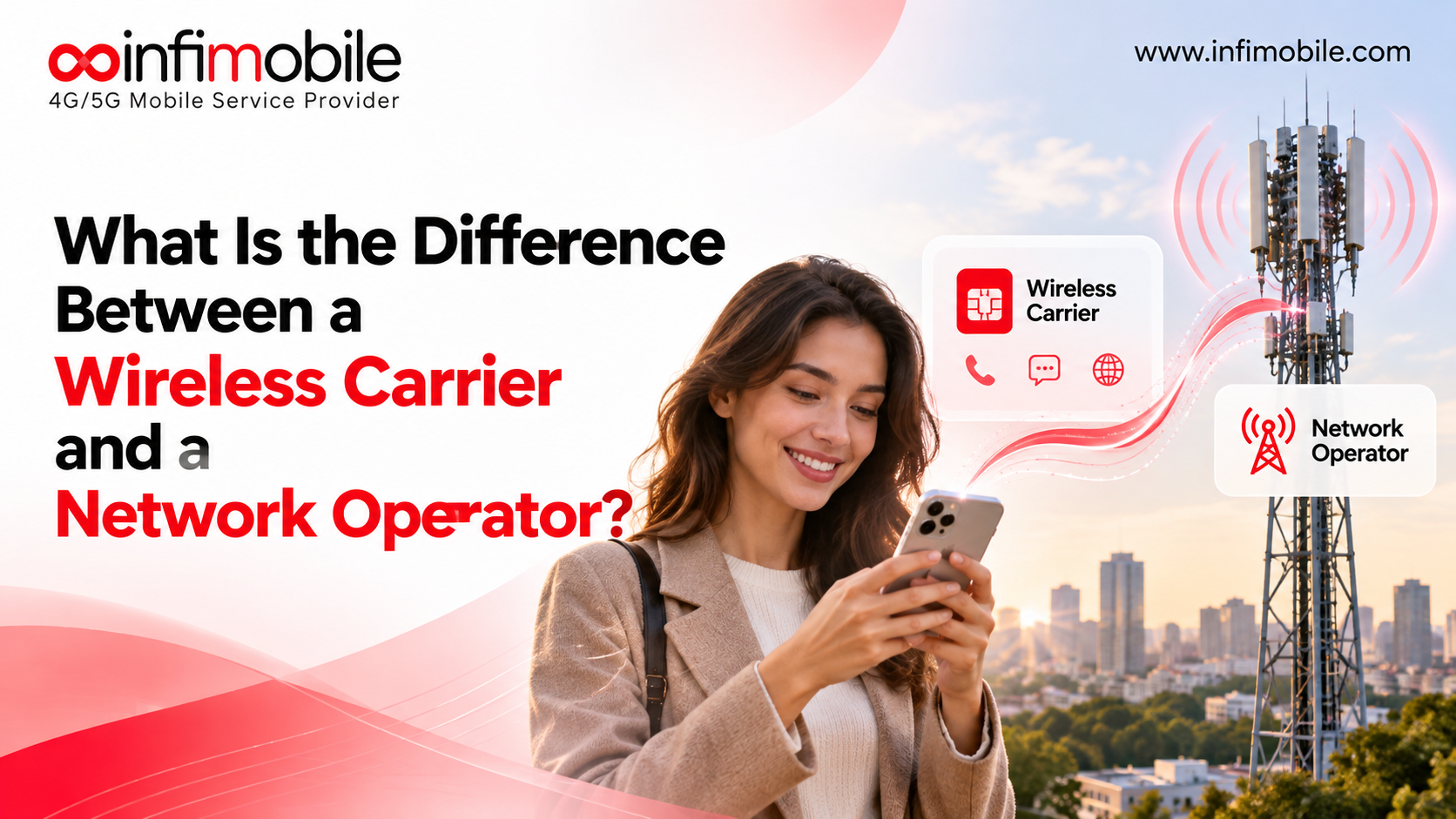
A network operator is the company that owns and runs the wireless network itself. In industry shorthand, it’s a mobile network operator, or MNO. It holds the licenses to use radio spectrum and operates the towers, antennas, and core systems that connect your phone to the network.
A wireless carrier is the company you pay for mobile service. In everyday American English, “carrier” is a broad, casual label for whoever sells you your plan.
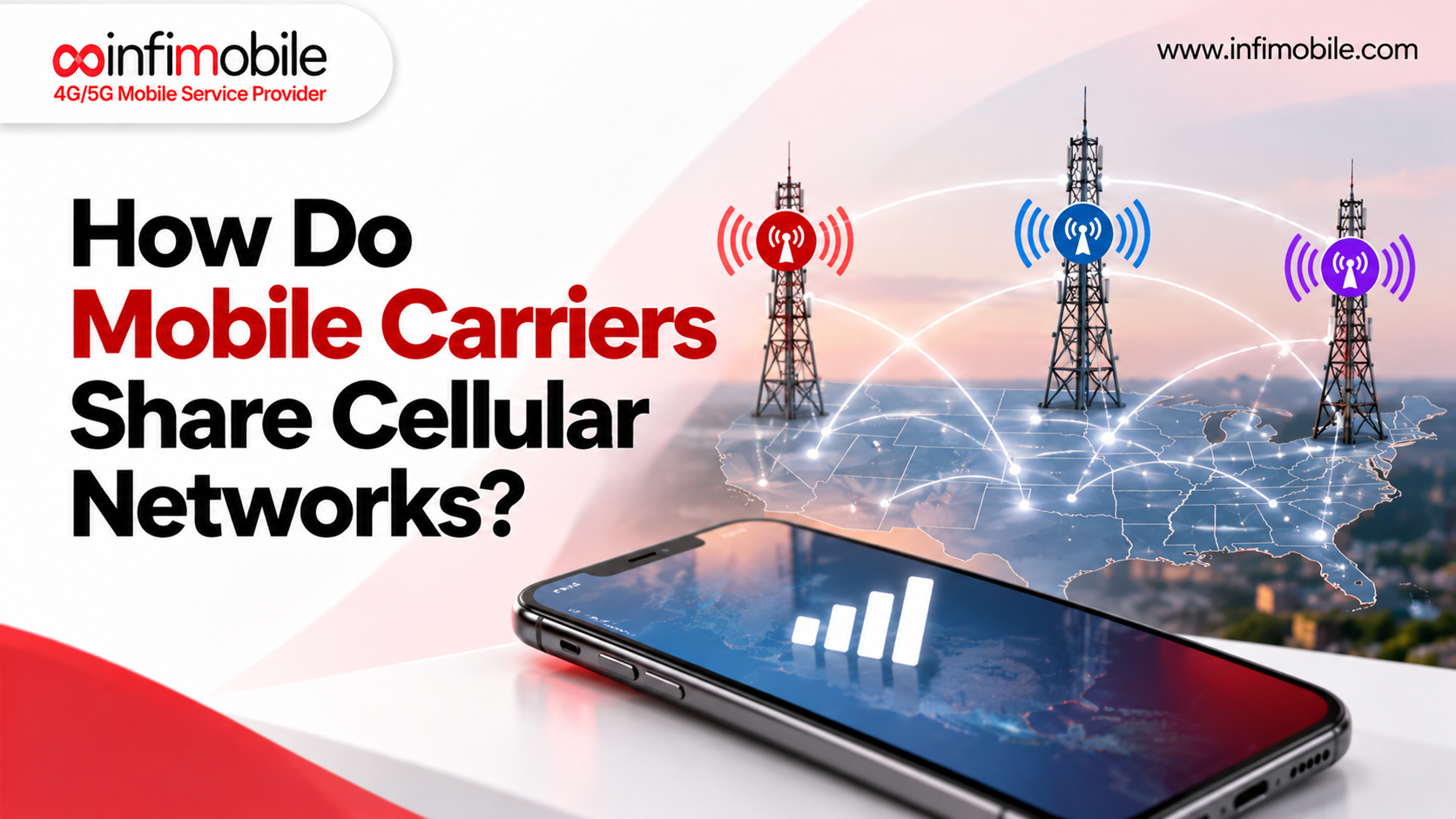
Here’s where it gets confusing: the biggest carriers are also network operators. When people say “the major carriers,” they usually mean the three national network operators: AT&T, T-Mobile, and Verizon. But plenty of wireless carriers don’t own a network at all. They buy wholesale access from a network operator and sell service under their own brand. Those companies are called mobile virtual network operators, or MVNOs.
So the clean way to think about it: every network operator is a wireless carrier, but not every wireless carrier is a network operator.
What Is a Network Operator?
A mobile network operator is defined by what it owns and controls. Typically, that includes:
- Licensed spectrum. Wireless signals travel over radio frequencies, and in the United States, the Federal Communications Commission licenses who can use which slices of spectrum. A network operator holds those licenses, often acquired at great expense.
- The radio access network. That’s the base stations, antennas, and equipment that your phone connects to over the air. Operators build and maintain this network, or control access to it. Many towers are owned by independent tower companies and leased to operators, but the operator runs the equipment and the network on them.
- The core network. Behind the towers sits the core, the systems that route calls and data, authenticate your SIM, and connect your traffic to the wider internet and to other carriers.
- Network engineering and upgrades. Rolling out technologies like 4G LTE and 5G, adding capacity, and fixing outages are all the network operator’s job.
Because they own the network, operators also decide what they do with spare capacity. Most major operators sell wholesale access to other companies, which is how MVNOs exist.
Network operators usually sell directly to consumers too, with their own stores, websites, and plans. That’s why the terms blur together: when you buy a plan straight from T-Mobile or Verizon, you’re buying from a company that is both a network operator and a carrier.
What Is a Wireless Carrier?
“Wireless carrier” is a looser, consumer-facing term. It describes the company that sells you mobile service, bills you, and handles your account. It doesn’t specify whether that company owns the network.
In casual conversation, “carrier” often means a network operator, because the household names in wireless are network operators. Industry glossaries even treat “carrier” and “network operator” as synonyms in many contexts. But in the broader sense, a carrier is simply a seller of wireless service, and that includes brands that run entirely on someone else’s network.
That’s the key point for shoppers. “Carrier” tells you who you pay. “Network operator” tells you who owns the infrastructure. They can be the same company, but they don’t have to be.
An everyday analogy helps. Think of the electric grid: one company may own the power plants and transmission lines, while other companies sell you the electricity under their own names and handle your billing. Both are “your electricity provider” in conversation, but only one owns the wires. Wireless works much the same way. The network operator owns the infrastructure, and the carrier is whoever you deal with for plans, support, and billing.
Where MVNOs Fit In
A mobile virtual network operator is a wireless carrier that doesn’t own spectrum or a radio network. Instead, it signs a wholesale agreement with a network operator, buys access to capacity in bulk, and resells it to consumers under its own brand.
Think of it as a retailer that sells a wholesaler’s product under its own label. The MVNO decides how to price and package plans, and it handles marketing, billing, and customer support. The host network operator carries the actual traffic.
MVNOs come in a few flavors:
- Resellers (sometimes called “light” MVNOs). They brand and sell the host’s service with little technical layer of their own.
- Fuller MVNOs. They operate more of their own systems, such as billing, SIM management, or even parts of the core network, while still relying on a host for spectrum and radio access.
Behind the scenes, there are also companies that help MVNOs launch. A mobile virtual network enabler (MVNE) provides technology and back-office services, and a mobile virtual network aggregator (MVNA) buys wholesale capacity and resells it to multiple MVNOs. Most consumers never deal with either, but they’re part of how smaller brands reach the market.
The result is a thriving ecosystem. The number of traditional network operators is relatively stable worldwide, while MVNOs outnumber them by more than two to one, and in the U.S. there are dozens of them competing on price, plan structure, and service.
Side by Side: Network Operator vs. Wireless Carrier
| Network Operator (MNO) | Carrier Without Its Own Network (MVNO) | |
| Owns spectrum licenses | Yes | No |
| Owns or controls the radio network | Yes | No, leases access |
| Builds and upgrades towers | Yes | No |
| Sells directly to consumers | Usually | Yes |
| Sells wholesale to others | Often | No |
| Sets its own plan prices | Yes | Yes |
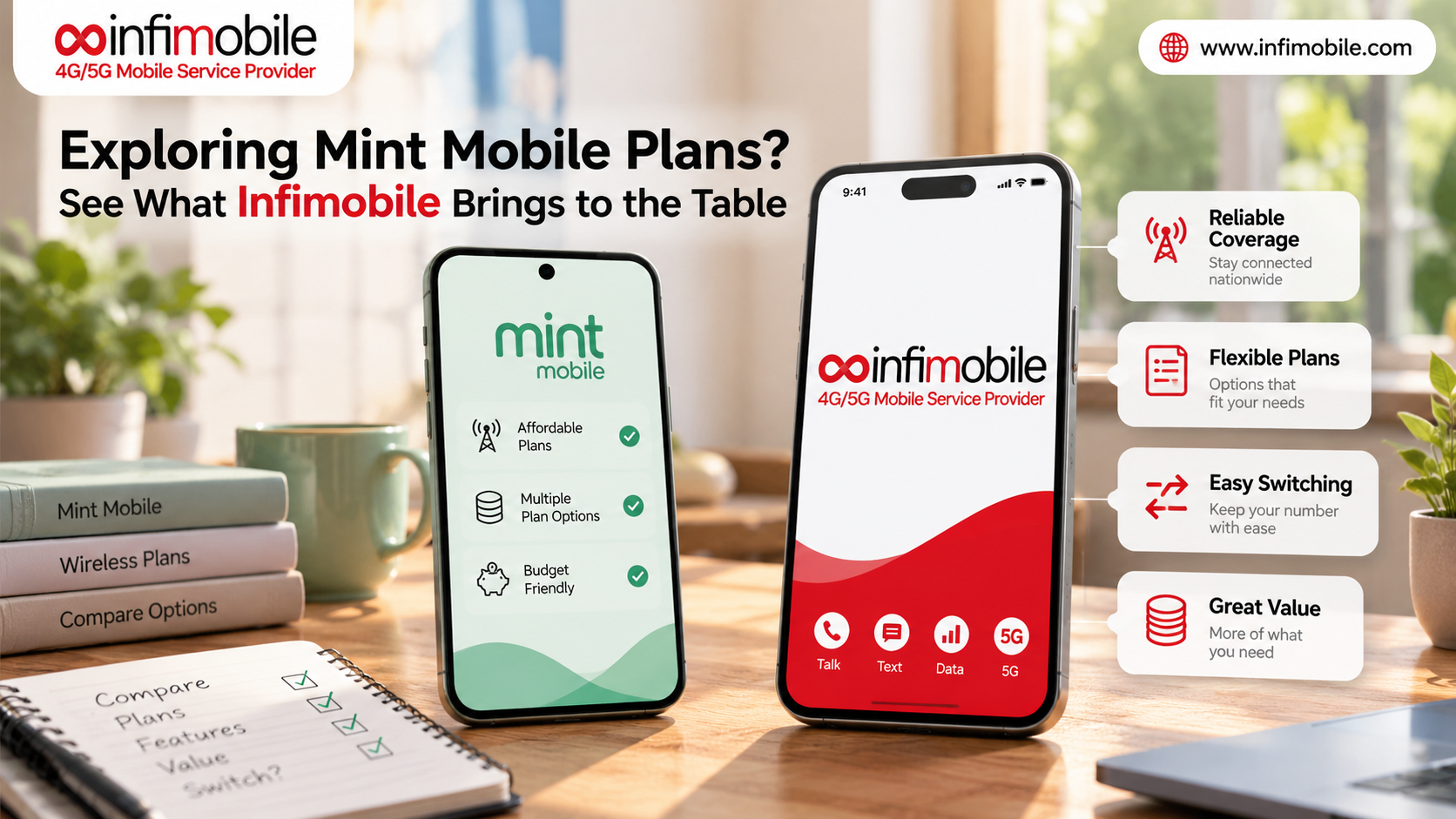
| Typical examples | AT&T, T-Mobile, Verizon | Infimobile, Mint Mobile, Tello |
| Coverage footprint | Its own network | The same footprint as its host |
What the Difference Means for You
Understanding the terminology is useful, but what shoppers really want to know is how it changes their experience. Here’s what actually shifts.
Coverage. An MVNO uses the same towers as its host network operator, so the geographic footprint is the same. If a spot has strong T-Mobile coverage, an MVNO running on T-Mobile gets that coverage there too. The practical consequence is that your signal depends on the network underneath your carrier, not on the brand name on your bill.
Price. MVNOs generally don’t carry the costs of building networks, running large retail footprints, or subsidizing devices. That’s much of why many offer lower prices, and why prepaid and annual plans are common among them. The savings come from a leaner business model, not from a different network.
Priority during congestion. Network operators usually prioritize their own direct customers when the network is busy. Depending on the wholesale agreement, MVNO customers may see slower data at peak times in crowded places. That’s a real but modest difference, and it’s standard across the prepaid industry.
Customer service and plans. Because an MVNO is a retail brand, it controls its own support, plan design, and pricing. That’s why different MVNOs on the same network can feel very different to deal with, even though their coverage is identical.
Network choice. Some MVNOs run on just one host network. Others can offer more than one. That matters, because the best network can vary from one neighborhood or commute to the next.
Devices and number portability. Your phone and your number are not locked to a network operator. If your phone is unlocked and compatible, you can usually bring it to an MVNO, and federal rules let you keep your phone number when you switch.
Common Myths, Cleared Up
“MVNOs have worse coverage.” Not exactly. They use the same towers as their host. Where MVNO customers can differ is in priority during heavy congestion, not in where a signal reaches.
“An MVNO isn’t a real carrier.” It is a real wireless carrier in the sense that matters to customers: it sells you service, bills you, and supports your account. What it lacks is ownership of the network.
“Network operators always give better service.” Network ownership gives an operator control over the network, but service quality depends on many things, including your location, your device, and how busy the network is. An MVNO on a strong network in your area can serve you very well.
“Carrier and network operator mean the same thing.” Often in casual speech, yes. Technically, no. “Carrier” describes who sells you service; “network operator” describes who owns the network.
How Infimobile Fits In
Infimobile is an MVNO. It doesn’t own towers or spectrum. It leases wholesale access to two major network operators, T-Mobile and Verizon, and sells prepaid plans under its own brand.
A few practical points follow from that:
- You choose your network. When you sign up, you pick whether your line runs on T-Mobile or Verizon. Not every MVNO offers that choice, and it can be valuable if one network covers your home, workplace, or regular routes better than the other.
- Coverage mirrors the host. Infimobile’s coverage in any given place is the coverage of the network you select there. Infimobile’s coverage and compatibility checker at infimobile.com/compatible helps you see what to expect at your address, and it’s wise to cross-check T-Mobile’s and Verizon’s public maps.
- Prepaid, annual plans. Infimobile’s core plans are 12-month prepaid plans, which let customers pay once for a year of service at a lower effective monthly rate. Plan details and current pricing are on the plans page at infimobile.com/plans.
- Keep your number and your phone. You can port your existing number to Infimobile and bring an unlocked, compatible phone, and a trial port-in option in the account portal lets you test service on a temporary number first.
- Occasional congestion slowdowns. As with any prepaid MVNO, data can occasionally be slowed when the host network is under heavy load.
How to Choose the Right Provider
Whether a provider is a network operator or an MVNO matters less than whether the service works where you live and fits your budget. A simple checklist helps:
- Check coverage at your address, not just in your city. Use the provider’s coverage tool and the host network’s public map.
- Find out which network is underneath. If you’re considering an MVNO, ask which network it runs on and whether you can choose.
- Compare plan structure, not just price. Look at data allowance, what happens when you run out, hotspot, and whether you pay monthly or upfront.
- Confirm your phone is compatible. You’ll typically need an unlocked device with 5G or 4G LTE and VoLTE support. Dial *#06# to find your IMEI and check it with the provider’s compatibility tool.
- Understand the commitment and refund terms before you pay, especially on prepaid plans paid in advance.
- Consider a trial first if the provider offers one, so you can test real-world coverage before committing.
Frequently Asked Questions
Not exactly. A network operator owns and runs the wireless network, including spectrum licenses, towers, and core systems. A wireless carrier is the company that sells you mobile service, which may or may not own a network. The big national carriers are both, while MVNOs are carriers without their own network.
Yes. An MVNO leases access to a host network operator’s network, so it uses the same towers and the same geographic footprint. That means the coverage you get depends on the host network you’re on in your area.
Usually not in everyday use. The main difference is priority: during heavy congestion, the host’s own customers may get priority, so MVNO data can occasionally slow down in crowded places. Speeds otherwise depend on the network, your location, and your device.
Infimobile runs on T-Mobile and Verizon, and you choose which one when you sign up. Checking coverage for your address on both networks can help you decide.
Yes. Number portability lets you take your phone number to a new provider. Gather your account number, transfer PIN, and billing ZIP code from your current carrier, keep your old line active until the transfer completes, and your number moves over.
The next time you see “carrier” and “network operator” used side by side, you’ll know what separates them: one owns the network, the other sells you service on it, and sometimes they’re the same company. For shoppers, the practical question is which network is underneath and whether it performs where you live. Check your coverage, compare plans, and see how Infimobile’s 12-month plans work at infimobile.com/plans.