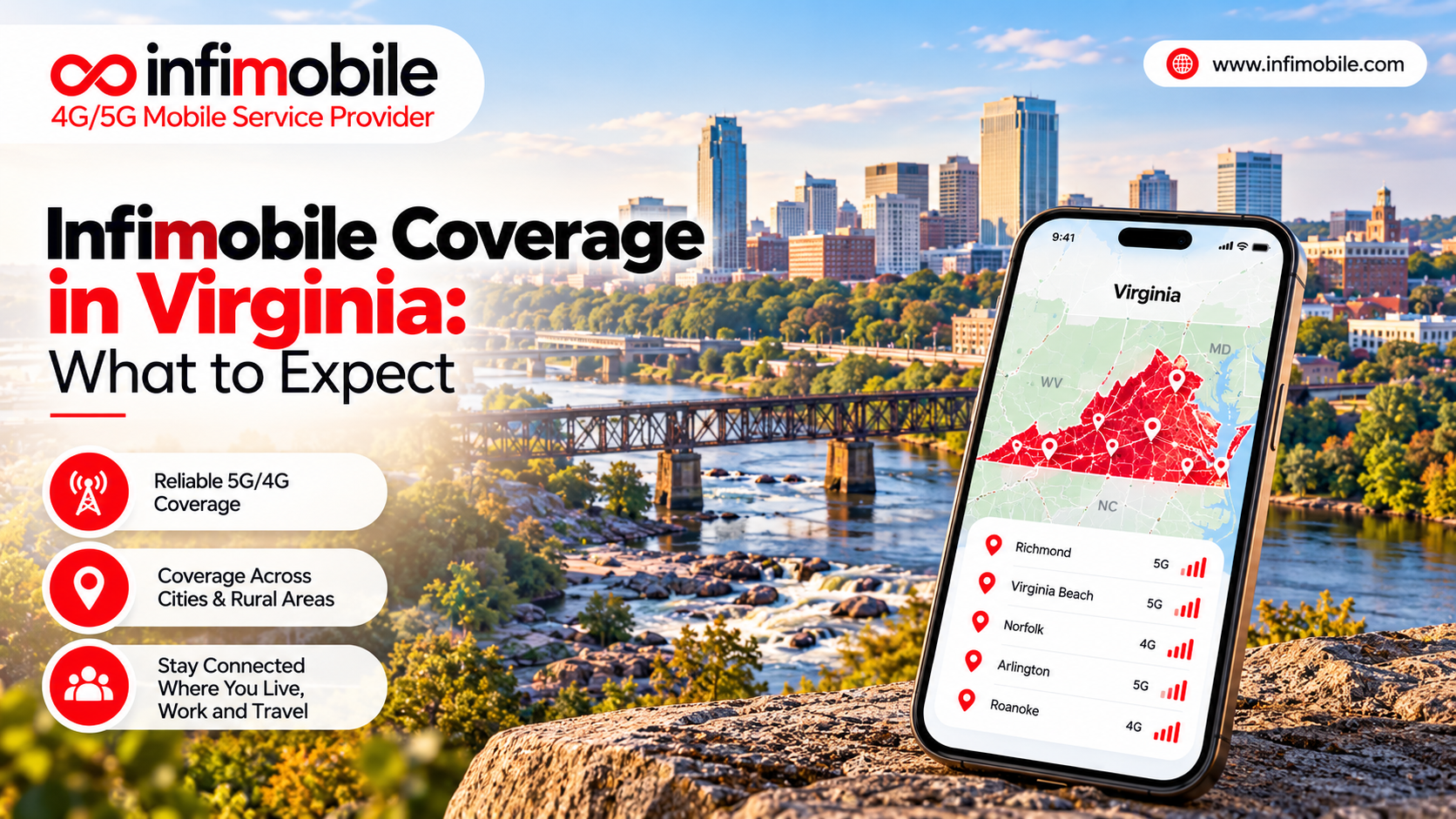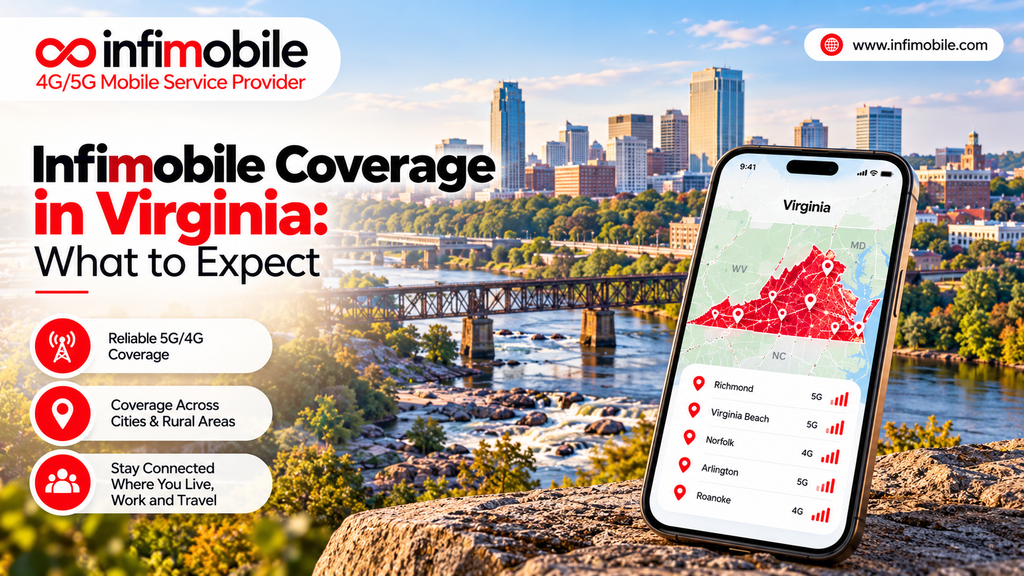
If you are considering a prepaid plan and wondering how Infimobile coverage in Virginia will feel in daily life, the short answer is that it depends on where you live, work, and travel in the state. Infimobile does not own cell towers. It runs on the T-Mobile or Verizon network, so your signal in Virginia follows the strength of the network you choose. That usually means strong service in cities and suburbs, and more variable service in mountains and remote areas. This guide explains how that works, what to expect in each part of the state, and how to check your own address before you buy.
How Infimobile Coverage Actually Works
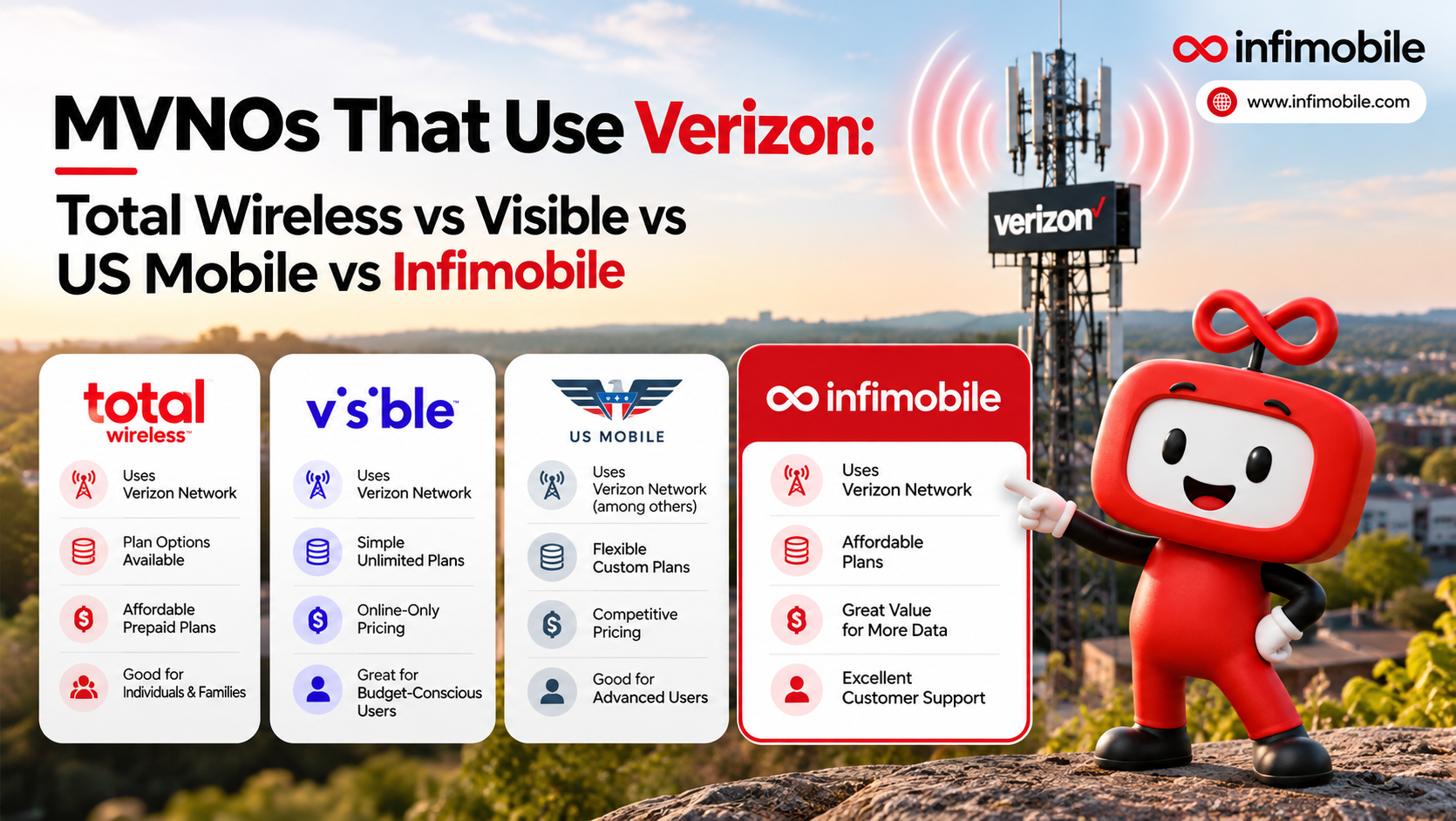
Infimobile is a mobile virtual network operator, or MVNO. In plain terms, it leases wholesale access to large national networks instead of building its own. Your phone connects to the same towers that serve the network’s own customers, and Infimobile keeps prices low by selling online, skipping retail stores, and keeping plans simple.
Here is what that means for you in Virginia:
- Your signal comes from your network choice. The plan you pick sets your data allowance, not your signal strength. Signal comes from T-Mobile or Verizon, depending on what you select at checkout.
- 5G where available, 4G LTE elsewhere. Your phone uses 5G in areas that have it and falls back to 4G LTE when it does not.
- Coverage is local. A strong signal in Fairfax does not guarantee the same signal in a hollow in the Allegheny Mountains.
- Some plans are tied to one network. The 12GB plan, for example, runs on Verizon, so confirm the network for the specific plan you want.
This setup is standard across the MVNO industry. It is not a limitation unique to Infimobile.
Why Virginia Coverage Varies From Place to Place
Virginia is a state of sharp contrasts. It stretches from Atlantic beaches to the Appalachian ridgelines in the far southwest, with dense suburbs, historic small towns, farmland, and national forest in between. Three things shape your signal more than anything else:
- Population density. Carriers build towers where the most people live, so busy corridors tend to get more capacity and faster upgrades.
- Terrain. Ridges, valleys, and thick tree cover can block or weaken radio signals, especially in the Blue Ridge and Appalachian regions.
- Distance from towers. In low-population counties, towers can be far apart, so a short drive can change your bars.
Keep these in mind as you read the regional breakdown below.
What to Expect Region by Region
Northern Virginia
Arlington, Alexandria, Fairfax, Loudoun, and Prince William are some of the most connected parts of the state. If most of your day happens here, you can generally expect consistent voice and data service and good odds of 5G on both networks. The main challenge is congestion. During rush hour on I-66, I-95, or the Dulles corridor, shared towers can get busy, and speeds may dip. Large office buildings, parking garages, and the Metro can also weaken your signal indoors, which is where Wi-Fi calling helps.
Richmond and Central Virginia
The Richmond metro area, along with Charlottesville and Fredericksburg, is generally well served. In city centers and surrounding suburbs, expect reliable calls and solid data. Service can become more patchy once you leave the main roads and head into rural stretches of counties like Louisa, Goochland, or Orange, so check your address if you live further out.
Hampton Roads and the Coast
Virginia Beach, Norfolk, Chesapeake, Newport News, and Hampton are dense and busy, so coverage is typically good. Heavy tourist traffic in summer can strain towers near the oceanfront. Highway bridges, tunnels, and open water can create short signal gaps while you travel, so do not be surprised if a call drops briefly on a long crossing.
Shenandoah Valley and the Blue Ridge
The valley along I-81, including Winchester, Harrisonburg, Staunton, and Lexington, is usually fine in towns and along the interstate. The picture changes in the mountains. On Skyline Drive in Shenandoah National Park, sections of the Blue Ridge Parkway, and hiking trails in the George Washington and Jefferson National Forests, you should expect spotty or missing service. This is normal for any carrier in rugged terrain. If you plan to hike or camp, download offline maps and tell someone your route first.
Southwest Virginia
Roanoke, the New River Valley, Bristol, and Abingdon are the main population centers and are usually well covered. Further out in places like Wise, Buchanan, Tazewell, and Lee counties, hills and deep valleys can cut service quickly. One network may perform noticeably better than the other in a given hollow, which makes the choice between Verizon and T-Mobile especially important here.
Southside, the Northern Neck, and the Eastern Shore
These areas are largely rural and spread out. Towns such as Danville, South Boston, Tappahannock, and Onancock tend to have workable service, but farmland and long stretches of low-density road mean you may see weaker signals between towns. Check your address, not just your county.
The National Radio Quiet Zone: A Virginia Special Case
Some western Virginia counties near the West Virginia border sit inside the National Radio Quiet Zone, a roughly 13,000-square-mile area created in 1958 to protect radio astronomy at Green Bank and a federal research station at Sugar Grove. Radio transmissions inside the zone are restricted, and that limits how powerful cell towers can be. Highland and Bath counties are among the Virginia areas most often mentioned, and news reports show local officials in the region have raised concerns about the effect on cell service and emergency communication.
What does this mean for you? If you live in or travel through this part of Virginia, do not assume you will have reliable service on any carrier, including Infimobile. Treat Wi-Fi calling, a home internet connection, and offline maps as essential, and test the area in person if you can.
Verizon or T-Mobile: Choosing a Network in Virginia
When both networks are offered on your plan, the best choice is the one that works best at the places you spend the most time. Neither network is the right answer for every Virginia address. Use this simple approach:
- Home first. Check both networks at your home address, since you spend the most time there.
- Work next. Check your workplace or school, including indoor signal if you can.
- Frequent routes. Think about commutes, family visits, and weekend trips to the mountains or coast.
- Ask people nearby. Neighbors and coworkers on either network can tell you more than a map.
Rural and mountain residents should pay extra attention here. Because terrain can favor one network over the other, comparing both can be the difference between a reliable line and a frustrating one.
How to Check Your Exact Coverage Before You Switch
The most reliable way to know what you will get is to check your specific address. Follow these steps:
- Use Infimobile’s compatibility and coverage tools. Visit infimobile.com/compatible to check device compatibility and review expected coverage for your area.
- Cross-check the carrier maps. Look up T-Mobile’s and Verizon’s public coverage maps for your ZIP code, since Infimobile’s service quality follows the network you choose.
- Check more than one address. Enter your home, workplace, and any place where you need a reliable signal.
- Confirm your phone is compatible. Infimobile requires an unlocked device that supports 5G or 4G LTE and is VoLTE-enabled. Dial *#06# to find your IMEI number, then enter it in the compatibility checker.
- Confirm the network for your plan. Make sure the plan you want runs on the network you have checked.
If you are unsure whether your phone is unlocked, ask your current carrier before you order. Locked phones cannot be used with Infimobile.
What You Get Once You’re Connected
Coverage only matters if the plan fits how you use your phone. Infimobile plans are prepaid, so you pay upfront for a set term with no contract. Features include:
- eSIM or physical SIM. Choose whichever your phone supports. An eSIM QR code arrives by email, so you can start setup without waiting for mail.
- Wi-Fi calling and texting. This is especially useful in Virginia homes and offices where the signal is weak indoors.
- 5G and 4G LTE data. Speeds depend on the network and your location.
- Nationwide talk and text. Allowances vary by plan, so read the plan details.
- Hotspot. Availability depends on the plan you choose.
Because prepaid network traffic can be deprioritized when towers are crowded, you may notice slower speeds in busy places like Northern Virginia at rush hour or Virginia Beach in July. That is normal for prepaid service.
Infimobile Plans for Virginia Residents
Here are Infimobile’s 12-month options at the time of writing:
| Plan | Data | 12-Month Price | Talk and Text |
| Deal Buster | 500MB | $30 | 100 minutes / 100 SMS |
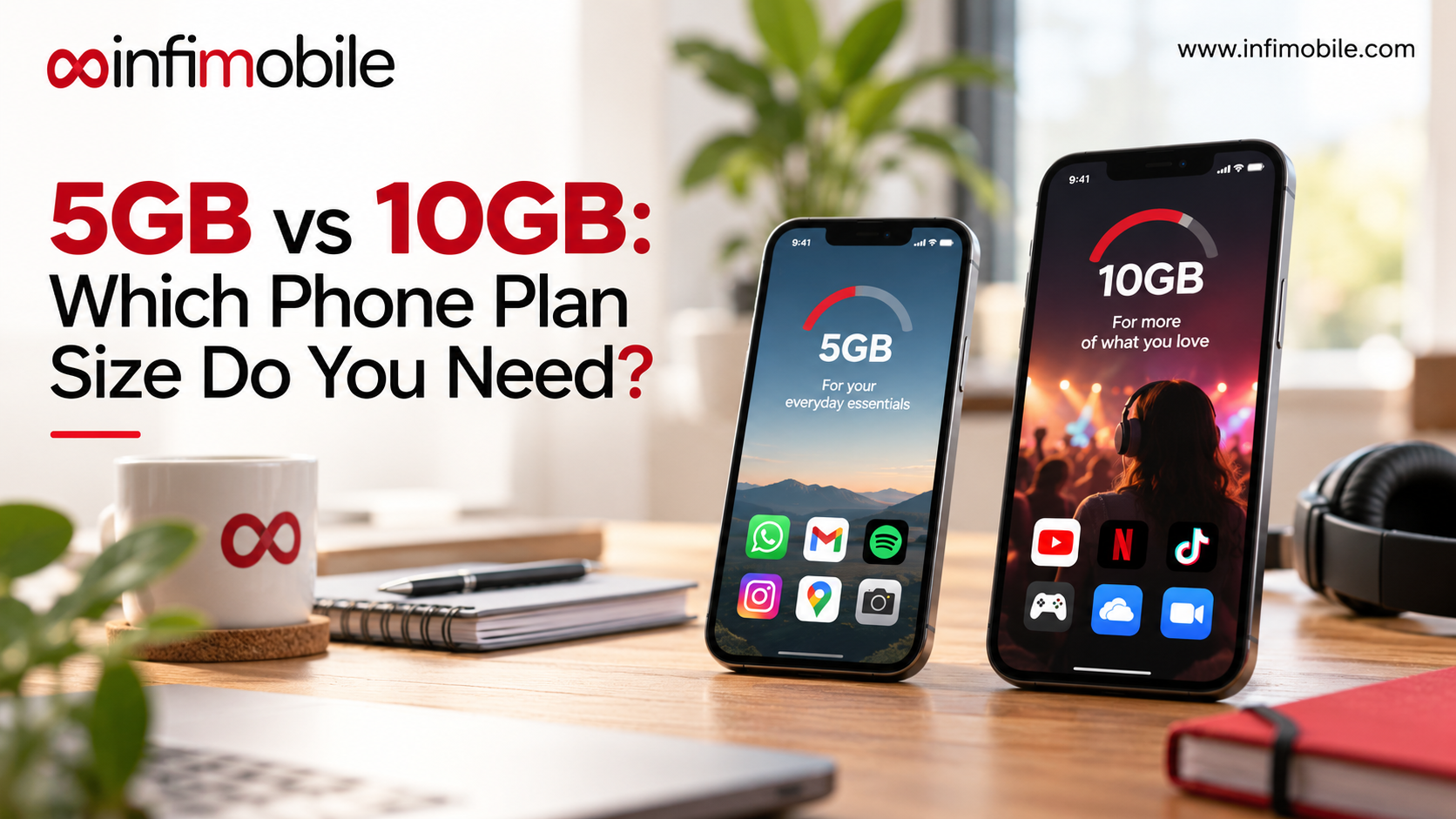
| Pro Plus | 5GB | $75 | 2,500 minutes / 2,500 SMS |
| Unlimited | 10GB | $75 | Unlimited nationwide |
| 12GB Plan | 12GB | $90 | Unlimited nationwide |
| Premium | 20GB | $120 | Unlimited nationwide |
| Promotional | 15GB | $108 | Unlimited nationwide |
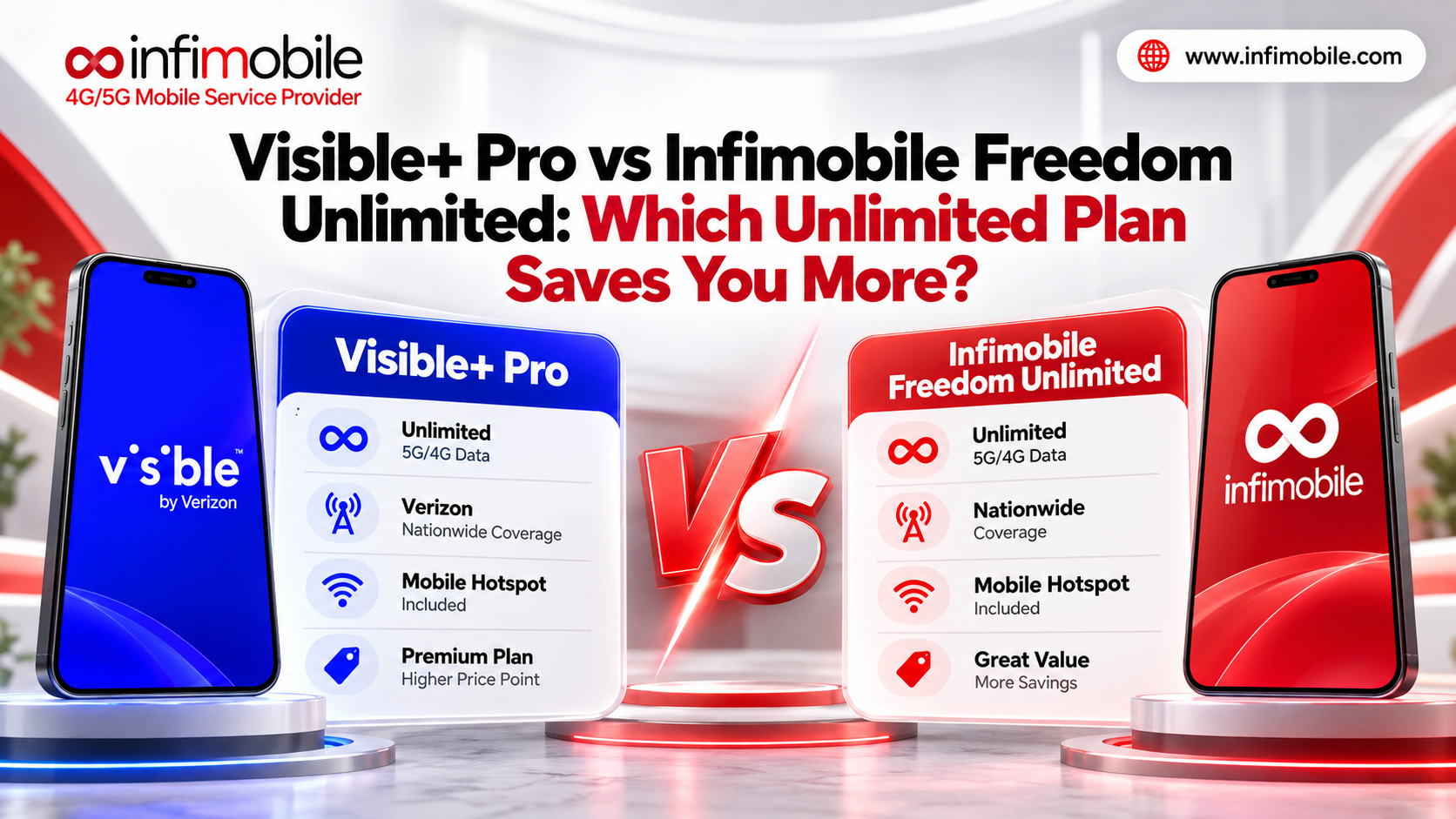
| Freedom Unlimited | Unlimited | $150 | Unlimited nationwide |
Prices change during flash sales and promotions, and final pricing may vary by device compatibility, so confirm the current price at infimobile.com/plans before you buy. If you are in a city or suburb, a mid-size plan such as 10GB or 12GB fits most people. If you live in a rural part of Virginia and rely on Wi-Fi at home, a smaller plan may be enough. Families can also look at the Family Plan, where the per-line price drops as you add more lines.
Tips for Getting the Best Signal in Virginia
Even with the right network, a few habits can improve your experience:
- Turn on Wi-Fi calling. It lets calls and texts travel over your home or office internet when cell signal is weak.
- Restart after you activate. A quick restart helps your phone register on the network.
- Update carrier settings. Keep your phone’s software current for the best network performance.
- Move near a window. Brick, metal roofs, and concrete can weaken signal indoors.
- Download maps and playlists before the mountains. Offline files are the easiest fix for dead zones.
- Save emergency contacts offline. In remote areas, do not rely only on mobile data.
Common Mistakes to Avoid When Switching in Virginia
A little preparation prevents most coverage complaints. Watch out for these:
- Judging coverage by county alone. Virginia counties often include both well-served towns and weak pockets. Always check the street address.
- Testing only outdoors. A good outdoor signal can turn into one bar inside a basement apartment or a metal-roofed building.
- Forgetting about travel. If you regularly visit the Blue Ridge, Southwest Virginia, or the Eastern Shore, check those areas too.
- Ordering before checking device compatibility. A locked or incompatible phone will not work, no matter how strong the coverage is.
- Choosing a long-term plan without testing. If you are unsure, start with a shorter term and confirm how the signal performs at home and at work.
Frequently Asked Questions
It can, but results vary by address. Infimobile follows the T-Mobile or Verizon network, so rural service depends on how well that network covers your area. Compare both maps for your ZIP code and test the signal in person if you can.
Choose the one that is strongest where you spend your time. In mountain and southwest areas, the difference between the two can be noticeable. Check your home, work, and regular routes on both maps before checkout.
Do not count on it. Mobile service is limited or absent along many mountain roads and trails, regardless of carrier. Download maps and plan your route ahead of time.
Usually yes, since service covers the same networks across the state, but local signal strength will change. If you move, recheck coverage at your new address and consider whether your network choice still fits.
Turn on Wi-Fi calling and text first. If it stays weak, compare the other network’s coverage at your address before your next purchase, and check for any plan terms on switching.
Final Thoughts
Infimobile coverage in Virginia is only as strong as the network behind it, which means good service in most cities, suburbs, and major corridors, and more variability in mountains, rural counties, and the National Radio Quiet Zone. The smartest move is to check your exact address with the compatibility tool and the carrier coverage maps before you commit. If your locations check out, a prepaid plan from Infimobile can cut your phone bill without a contract. Explore the options at infimobile.com/plans and make sure your phone is ready at infimobile.com/compatible.