Most people shopping for a cell phone plan default to thinking in monthly terms, because that is how the big three carriers, AT&T, T-Mobile, and Verizon, have trained the market to think over the past two decades. But a growing number of Mobile Virtual Network Operators (MVNOs) have built their entire business model around a different idea: pay once a year, skip the monthly billing cycle entirely, and pocket a meaningful discount for doing it. If you are tired of unpredictable phone bills, understanding which MVNOs offer true annual plans and how those plans actually compare can save you hundreds of dollars a year.
The rise of annual prepaid plans represents a fundamental shift in how consumers can think about mobile service. Instead of being locked into a cycle of recurring charges, contract obligations, and surprise fees, a growing segment of the MVNO market is offering genuine alternatives that reward customers for commitment while eliminating billing complexity. This shift is particularly attractive to budget-conscious consumers, families looking to reduce expenses, and anyone who wants absolute clarity on their wireless costs from day one.
What “Annual Phone Plan” Actually Means
Before comparing providers, it is worth clarifying what an annual plan is and is not. Some carriers advertise a low monthly price that only applies if you prepay for 12 months upfront. Others let you pay monthly at a higher rate, with a discount only kicking in if you choose the annual billing option. And a smaller group of MVNOs are annual-first, meaning the entire pricing structure is built around a single yearly payment rather than a recurring monthly charge.
This distinction matters because “advertised monthly price” and “what you will actually pay upfront” are often two very different numbers. A plan advertised at $15 a month might actually require a $180 payment on day one. A plan advertised at $6.25 a month might mean a single $75 charge once a year, with nothing else to think about until renewal. Knowing which model you are dealing with prevents surprises at checkout and helps you budget accurately.
It also matters because the two models serve very different customer needs. Someone who wants absolute price certainty and doesn’t mind paying upfront is well served by an annual-first carrier. Someone who values month-to-month flexibility, even at a slightly higher price, is better served by a carrier that treats annual billing as an optional add-on rather than its core offering.
MVNOs That Offer Annual Plans
Infimobile: The Annual-First Leader
Infimobile is one of the clearest examples of an MVNO built specifically around annual billing. Rather than treating annual pricing as an optional discount layered on top of a monthly plan, Infimobile’s entire lineup is structured around 12-month prepaid terms, with shorter 3-month and 6-month options available for people who are not ready to commit for a full year.
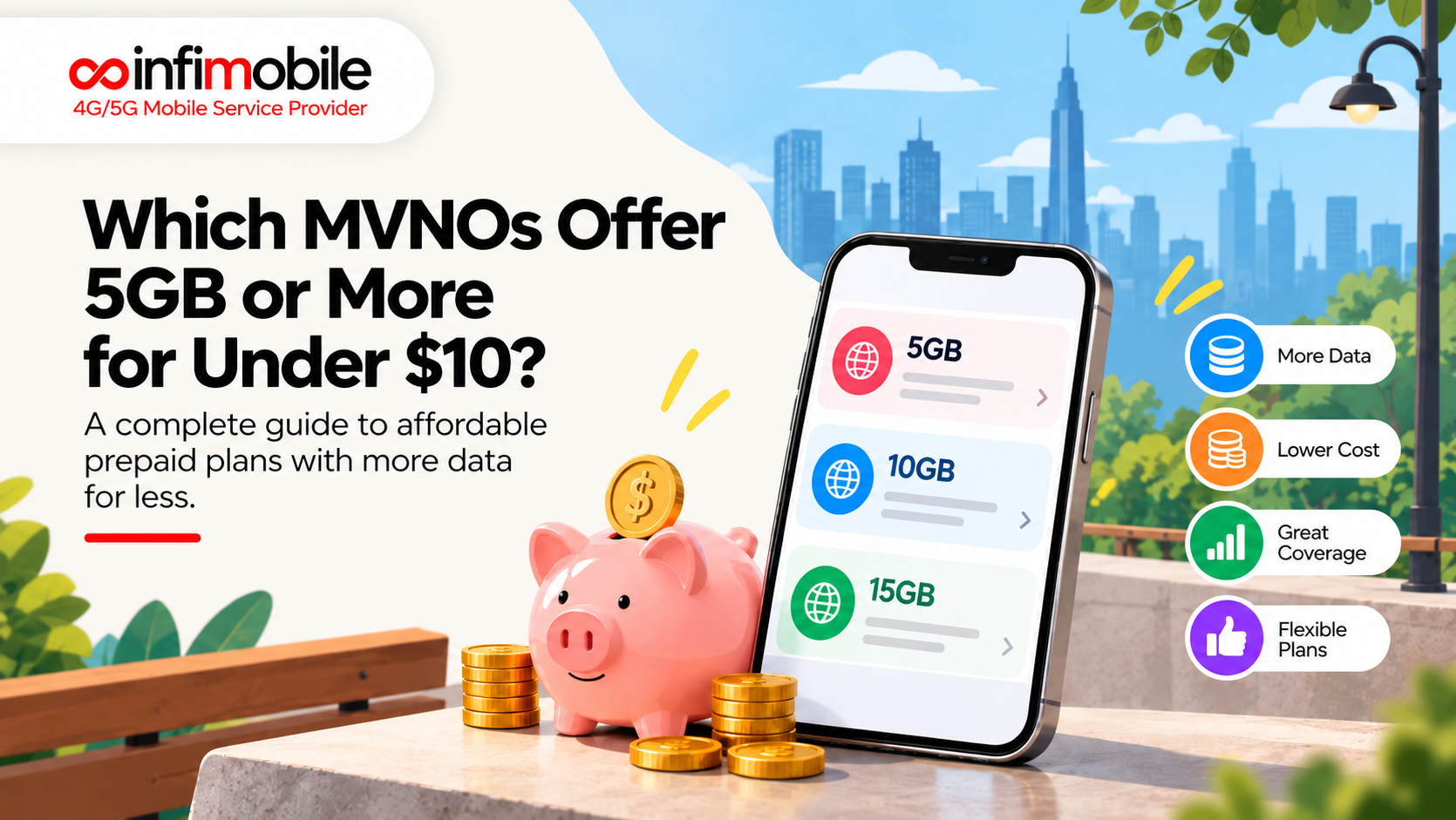
Its annual tiers include a 5GB plan at $75 per year (about $6.25 a month), a 10GB plan at $99 per year (about $8.25 a month), and a 15GB plan at $150 per year (about $12.50 a month), with higher-data tiers available as well. Every plan runs on your choice of the T-Mobile or Verizon network, so you are not sacrificing coverage to get the lower price.
What makes Infimobile particularly transparent is that the annual price is the primary price, not a discounted version of a higher monthly rate. This means pricing is easy to plan around from day one. You know exactly what you will pay for the entire year, and there are no hidden fees or surprise rate increases mid-cycle. The dual-network option is also valuable: if you move to an area where one network has better coverage than the other, you can switch your underlying network through your account without changing providers.
Mint Mobile: The Marketing-Forward Option
Mint Mobile also offers annual plans, and its marketing leans heavily on the “$15 a month” style pricing that only applies when you prepay 12 months in advance (a $180 upfront payment). If you decline the annual commitment, Mint’s monthly rate typically doubles. Mint runs exclusively on T-Mobile’s network and does not include taxes and fees in its advertised price, so the real cost is usually a few dollars higher than the headline number suggests.
The company’s aggressive marketing and strong brand recognition make it a popular choice, and many customers appreciate the straightforward annual structure. However, if you are sensitive to hidden costs, remember that taxes and fees will be added to the final bill, making the true cost slightly higher than advertised.
US Mobile: The Flexible Dual-Network Option
US Mobile offers both monthly and annual billing across most of its plans, with annual prepay unlocking a lower effective monthly rate. Unlike Mint, US Mobile gives you a choice of network (AT&T, T-Mobile, or Verizon), and its pricing generally includes taxes and fees, which makes it easier to know your real cost upfront.
The company also allows you to pause your account for up to 60 days per year without losing your phone number, a feature that can be valuable for people who travel internationally or have seasonal coverage needs. The ability to switch between networks also provides valuable flexibility if your regional coverage needs change.
Visible: The Verizon-Owned Compromise
Visible, owned by Verizon, technically offers an annual option on some of its plans, but its core appeal has always been a flat, no-commitment monthly rate. Annual prepay on Visible shaves a few dollars off the monthly-equivalent price, but the discount is smaller than what you will find with annual-first MVNOs like Infimobile. Visible’s appeal is primarily to customers who want simplicity and Verizon’s network reliability without the major carrier pricing, rather than to customers specifically seeking maximum annual savings.
Visible’s unlimited plan costs $45 per month with no annual commitment, or approximately $375 per year. Visible is better thought of as a month-to-month carrier with an optional annual discount, rather than an annual-first MVNO.
Tello: The Traditional Month-to-Month Option
Tello, by contrast, is primarily a month-to-month carrier. It does not heavily promote annual prepay, and its low prices are already achieved through simple, no-commitment monthly billing rather than an upfront annual payment. If you specifically want an annual plan with a lump-sum upfront payment, Tello is generally not the carrier built for that. Tello’s appeal lies in its simplicity and flexibility rather than in annual billing discounts.
Why Annual Billing Tends to Be Cheaper
MVNOs do not own network infrastructure. They lease capacity wholesale from the major carriers and resell it. Their profitability depends heavily on predictable revenue and low customer service overhead. When you pay for 12 months upfront, the MVNO gets certainty: guaranteed revenue, no monthly billing processing, no missed payment risk, and a much lower chance you will churn to a competitor mid-year. That certainty is valuable enough that many MVNOs are willing to pass a meaningful chunk of it back to you as a discount.
This is especially visible in Infimobile’s structure, where the annual price essentially reflects a bulk discount for committing upfront, similar to how buying a year’s supply of anything is usually cheaper per unit than buying it a month at a time. The carrier saves on billing infrastructure and payment processing fees—credit card processing alone can cost 2-3% of transaction value, which adds up quickly over 12 monthly billing cycles. The carrier also saves on customer service overhead related to billing disputes, payment failures, and account management. By eliminating all of this, annual-first carriers can reduce their operational costs significantly.
Additionally, annual prepayment reduces customer acquisition and retention costs. An MVNO that knows you have paid for 12 months of service is much less likely to spend money trying to retain you during that period. They know you are committed, so they can redirect those retention marketing dollars elsewhere. All of these savings accumulate, and the most transparent MVNOs pass them directly to the customer rather than treating them as pure profit.
Who Should Choose an Annual Plan
Annual plans make the most sense if you have a predictable, stable data usage pattern and do not expect to need a different plan tier soon. They also work well if you would rather pay once and forget about your phone bill for a year, or if you are setting up a secondary line, a kid’s first phone, a senior parent’s line, or a backup device where simplicity matters more than flexibility.
Specific scenarios where annual plans excel:
- Budget-conscious families: Locking in a low annual rate for multiple family members can result in substantial savings compared to monthly carriers.
- Stable usage patterns: If you consistently use the same amount of data each month, an annual plan eliminates billing surprises.
- Travel and backup phones: A secondary device with a $75/year plan is cost-effective for occasional use.
- Price certainty: If you are concerned about carriers raising prices, an annual plan locks in today’s rates.
- Predictable needs: If you know you will not be switching devices or carriers for at least a year, annual prepay makes financial sense.
Locking in today’s pricing rather than risking future rate increases is another good reason to consider going annual, particularly in an environment where carriers have historically raised prices annually.
Hidden Costs and Considerations
While annual plans are generally transparent, there are some potential hidden costs worth considering:
Taxes and fees: Some carriers include taxes and fees in their advertised annual price, while others add them at checkout. A plan advertised at $75 per year should cost exactly $75 if taxes are included, but might cost $80-85 if they are added afterward. Always check whether the quoted price is final or subject to additional charges.
Activation fees: Some MVNOs charge activation or setup fees, while others waive them. This is usually a small amount ($5-25), but it is worth factoring into your total first-year cost.
Early cancellation: If you need to cancel before the year ends, most carriers will not refund your prepayment. Some offer prorated refunds or account credit for unused months, but many do not. Reading the fine print before you commit is essential.
Network deprioritization: Many MVNO plans include a clause noting that data may be deprioritized compared to the major carrier’s own customers during periods of network congestion. This is usually not a problem for light-to-moderate users, but heavy data users should be aware.
How to Compare Annual Plans Fairly
When comparing annual MVNO plans, do not just look at the sticker price. Divide the total annual cost by 12 to get a true monthly-equivalent number, and check whether taxes and fees are already included. A $ 75-a-year plan with taxes included is a fundamentally different deal than a $ 180-a-year plan where you are still paying sales tax on top at checkout.
Create a comparison spreadsheet that includes:
- Annual prepaid price
- Taxes and fees (if not included)
- Total first-year cost
- Monthly-equivalent cost
- Data bucket and speeds
- Network options
- Early cancellation refund policy
- International roaming options (if needed)
It is also worth checking what happens if you need to cancel early. Some carriers offer prorated refunds or account credit for unused months, while others do not refund anything once you have prepaid. Reading the fine print before you commit is always worth the five minutes it takes.
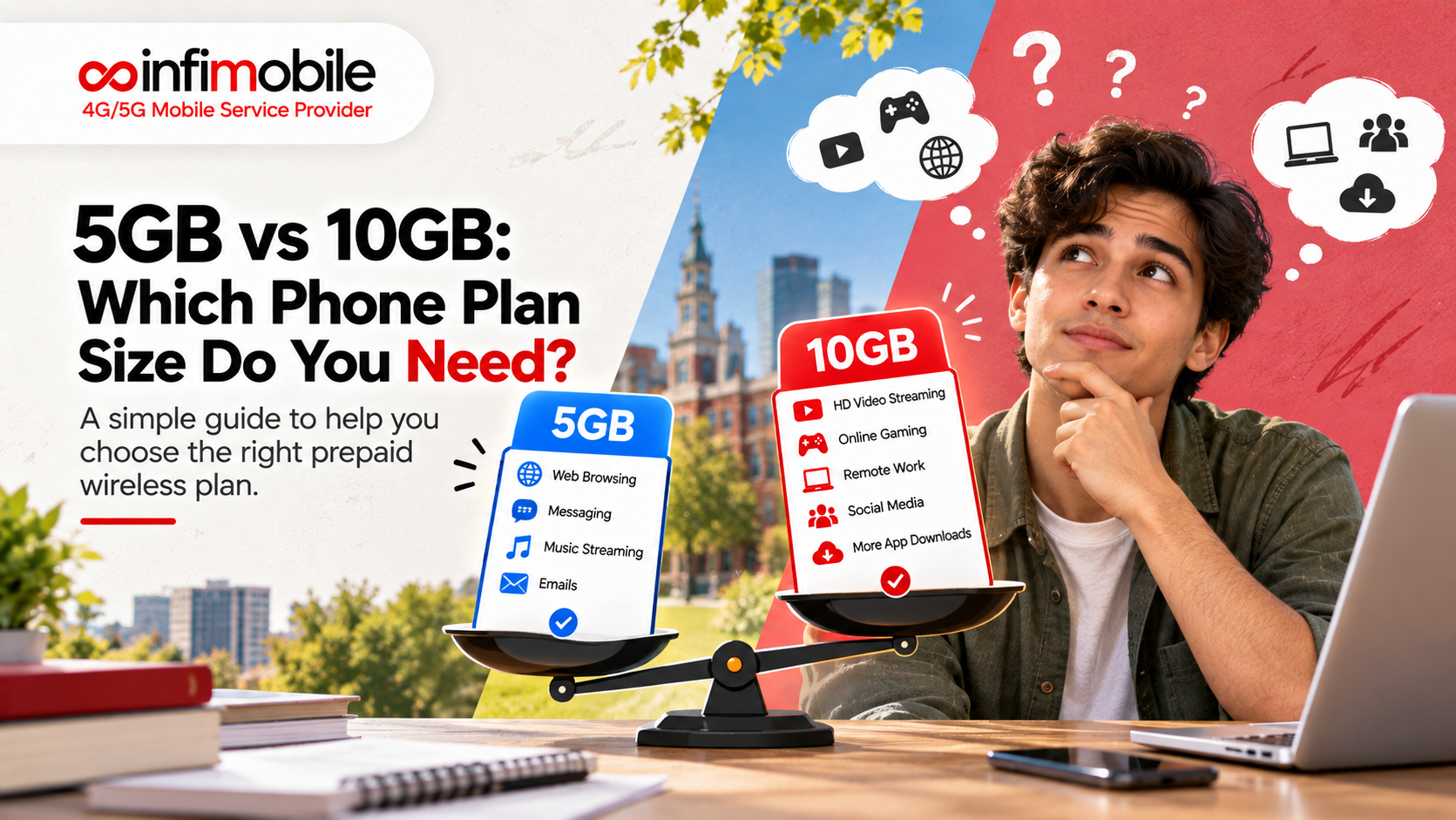
Additionally, consider your data usage trends. If you are uncertain about your annual data needs, a 3-month or 6-month plan might be a better starting point. Once you have used an MVNO for a few months, you will have better data on your actual usage patterns and can commit to a full-year plan with confidence.
FAQs
It depends on the carrier. Infimobile, for example, allows unused data to carry over if you switch plans within the first few months of an annual term, and offers prorated account credit for the remaining balance in other cases. Always check the specific refund policy before committing.
No, annual prepaid plans are not the same as a contract. You are paying upfront for 12 months of service, but there is no credit check, no early termination fee, and no obligation to renew. You simply will not get a refund for the full year if you decide to leave early, depending on the provider’s policy.
With providers like Infimobile that offer a choice between T-Mobile and Verizon, you can generally select or switch your underlying network through your account, which is useful if your coverage changes when you move.
In almost every case, yes. Annual prepay typically saves 20 to 75 percent compared to paying the same carrier month to month, since the discount reflects reduced billing overhead and guaranteed revenue for the carrier.
Most carriers will prompt you to renew before your term ends and let you choose the same plan or switch to a different data tier. As long as you renew before the expiration date, your phone number and service continue uninterrupted.
The Bottom Line
If your goal is the lowest possible annual cost with no surprises, Infimobile’s annual-first model, combined with dual-network flexibility between T-Mobile and Verizon, makes it one of the most straightforward options in the MVNO space. The company’s transparent pricing structure, flexible prepayment terms (3, 6, or 12 months), and included taxes make budgeting predictable and easy.
Mint Mobile and US Mobile are solid alternatives if you want annual pricing bundled with additional perks or network flexibility. Mint excels at aggressive pricing and brand recognition, while US Mobile offers multi-network flexibility and account pause options that can be valuable for certain customers.
Visible and Tello are better suited to people who prioritize monthly flexibility over annual savings. If maximum savings matter most, these month-to-month carriers will not compete with true annual-first options.
Whichever direction you lean, running the actual numbers before you commit is the only way to know for certain which plan wins for your situation. Compare your expected annual usage against each provider’s plans, factor in taxes and fees, and consider whether you have the cash flow to make an upfront annual payment.